
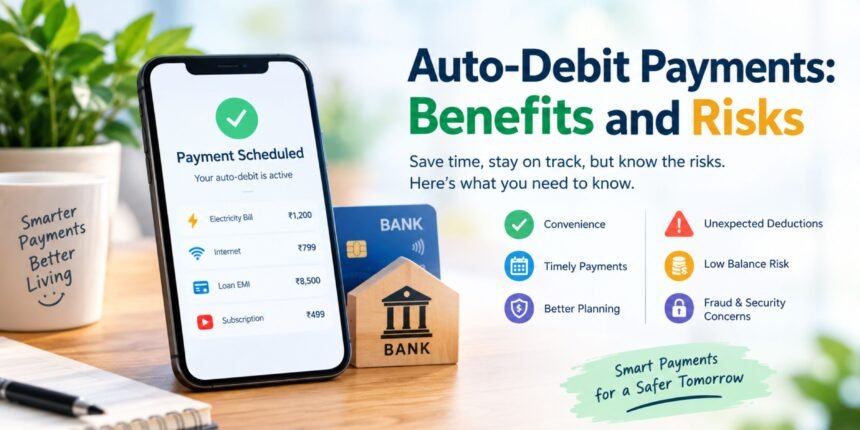
Managing monthly bills can become stressful when you have multiple subscriptions, loan payments, insurance premiums, and utility bills to remember. Auto-debit payments offer a convenient way to handle these regular expenses without manually making every payment. However, while this payment method saves time, it also comes with certain risks that users should understand.
In today’s digital economy, auto-debit payments are becoming increasingly common. From streaming subscriptions to electricity bills and loan instalments, automatic payments help people manage recurring financial commitments more efficiently. Before enabling this feature, it is important to understand how it works, its advantages, and the precautions needed to protect your money.
What Are Auto-Debit Payments?
Auto-debit payments are transactions in which money is automatically deducted from your bank account, debit card, credit card, or another authorised payment source according to a payment instruction you have approved.
Instead of making each payment manually, you give permission to a bank, merchant, or payment service provider to collect the required amount under agreed conditions.
For example, if you subscribe to a monthly streaming service, the subscription fee may be deducted automatically on the renewal date. Similarly, a bank may process a recurring loan instalment through an authorised automatic payment arrangement.
In India, common methods include UPI AutoPay, electronic mandates, National Automated Clearing House (NACH) instructions, and recurring card payments. The exact process depends on the payment method, service provider, and applicable rules.
How Do Auto-Debit Payments Work?
The process usually involves a few straightforward steps.
- Choose a payment method: Select your bank account, card, or supported digital payment option.
- Authorise the payment: Approve the recurring payment instruction and review its terms.
- Set payment conditions: Depending on the arrangement, specify or review the amount, frequency, validity period, and other applicable conditions.
- Automatic deduction: The payment is processed according to the authorised schedule.
- Receive notifications: Your bank or payment provider may send alerts about successful transactions, upcoming payments, or failed deductions.
Some arrangements use a fixed amount, while others allow variable amounts depending on the bill. Therefore, always check the terms before authorising automatic deductions.
Benefits of Auto-Debit Payments
1. Convenient and Time-Saving
One of the biggest advantages of auto-debit payments is convenience. You do not need to open a banking app or visit a payment website every time a bill becomes due.
Once the payment instruction is active, eligible recurring payments can be processed automatically. This is particularly useful for people who manage several monthly expenses.
2. Helps Avoid Missed Payments
Forgetting a payment deadline can lead to late fees, service interruptions, or other consequences. Auto-debit can reduce this risk by processing payments according to the authorised schedule.
It can be helpful for recurring expenses such as insurance premiums, loan instalments, and utility bills. However, successful payment is not guaranteed if your balance is insufficient or the transaction encounters a technical problem.
3. Supports Better Financial Organisation
Automatic payments make recurring expenses more predictable. Knowing when regular bills are scheduled to leave your account can help you organise your monthly budget.
You can also review recurring transactions to understand how much of your income goes towards subscriptions, household bills, insurance, and other commitments.
4. Reduces Manual Errors
Manually entering payment details for every transaction can sometimes lead to mistakes. Auto-debit reduces the need to repeat this process for each billing cycle.
After the initial authorisation, payments follow the approved instructions, reducing repetitive work and the chance of entering incorrect details during every transaction.
5. Useful for Essential Bills and Subscriptions
Auto-debit is particularly useful for payments that occur regularly and have predictable schedules. These may include internet bills, mobile recharges, insurance premiums, membership fees, and selected loan repayments.
When used carefully, it can simplify everyday financial management and reduce the effort required to maintain essential services.
Risks of Auto-Debit Payments
Although automatic payments are convenient, they should not be treated as a completely risk-free option.
1. Unexpected Money Deductions
One common problem occurs when a subscription renews automatically or a service provider changes the billing amount according to the agreed terms.
You may forget about a free trial that has converted into a paid subscription or overlook a recurring service you no longer use. As a result, money may be deducted for something you do not actively need.
How to reduce this risk: Review your recurring payments regularly, read renewal conditions, and cancel unwanted subscriptions before the next billing date.
2. Insufficient Bank Balance
If your account does not have enough money when an automatic payment is due, the transaction may fail. Depending on the payment method and provider, you could face a late fee, a failed-payment charge, or another consequence.
For loan repayments and insurance premiums, a missed deduction may also require additional action to prevent further complications.
How to reduce this risk: Maintain a sufficient balance before scheduled payments and enable transaction alerts so you can respond quickly to failed deductions.
3. Fraud and Unauthorised Transactions
Financial fraud is another concern. Scammers may attempt to trick users into approving payment requests, sharing sensitive banking information, or authorising recurring transactions without fully understanding them.
A legitimate auto-debit arrangement requires appropriate authorisation. Simply receiving a message or payment request does not mean you should approve it.
How to reduce this risk: Authorise mandates only through trusted banking or payment applications. Never share your UPI PIN, OTP, password, or other confidential authentication details with another person.
4. Difficulty Tracking Small Expenses
Small recurring payments may appear insignificant individually, but several subscriptions can add up to a substantial monthly expense.
For example, paying for multiple entertainment platforms, cloud storage services, apps, and memberships can gradually increase your regular spending.
How to reduce this risk: Check your bank statements and payment history at least once a month. Identify duplicate services and cancel subscriptions that no longer provide value.
5. Cancellation and Refund Complications
Stopping a service does not always mean its payment mandate has automatically been cancelled. Depending on the provider, you may need to cancel the subscription and separately revoke the payment authorisation.
Refunds can also take time, and cancelling an automatic payment may not eliminate an outstanding contractual obligation.
How to reduce this risk: Follow the provider’s cancellation process, check the mandate status, and retain confirmation messages or reference numbers. If a deduction appears unauthorised, contact your bank or payment provider promptly.
Auto-Debit vs Manual Payments
Understanding the difference between automatic and manual payments can help you decide which option suits your financial habits.
| Feature | Auto-Debit Payments | Manual Payments |
|---|---|---|
| Convenience | Payments are processed automatically under authorised conditions | You initiate each payment |
| Time required | Usually less after setup | Requires regular attention |
| Missed payment risk | Lower, but not eliminated | Higher if you forget the due date |
| Spending control | Requires regular monitoring | Provides an opportunity to review each payment |
| Unexpected deductions | Possible under the authorised arrangement | Generally less likely without a new payment action |
| Best suited for | Predictable recurring expenses | Variable bills and occasional purchases |
Neither method is perfect for every situation. Auto-debit works well for regular commitments, while manual payments may be preferable when you want to review each expense before paying.
How to Use Auto-Debit Payments Safely
You can enjoy the convenience of automatic payments while reducing unnecessary financial risks by following these practical steps.
1. Review Every Mandate Before Approval
Check the merchant’s name, payment frequency, amount or maximum limit where applicable, validity period, and cancellation conditions. Do not approve a payment instruction you do not understand.
2. Enable Banking Notifications
Turn on transaction alerts through your bank or payment provider. Notifications help you identify unexpected deductions and failed transactions quickly.
3. Monitor Your Bank Statements
Review your account activity regularly. Look for unfamiliar merchants, duplicate charges, and subscriptions that you no longer use.
4. Keep Your Banking Apps Secure
Use strong passwords, device locks, and official banking applications. Avoid clicking suspicious links or sharing confidential authentication information.
5. Cancel Unnecessary Subscriptions
Before a free trial ends or a subscription renews, decide whether you still need the service. Follow the official cancellation process and verify that the payment arrangement has been stopped.
6. Know How to Stop a Mandate
Learn how to manage or revoke authorised recurring payment instructions through your bank, payment application, card issuer, or merchant. Keep confirmation of the cancellation for future reference.
7. Act Quickly on Suspicious Transactions
If you notice a deduction you did not authorise, contact your bank or payment provider immediately and follow its dispute-reporting process. In India, suspected cyber financial fraud can also be reported through the official National Cyber Crime Reporting Portal or helpline 1930.
Are Auto-Debit Payments Safe?
Auto-debit payments can be safe when you use trusted providers, understand the terms of authorisation, and monitor your transactions regularly. They offer convenience, but their safety also depends on the security of your account and the way you manage payment permissions.
The key is to avoid approving recurring payments without checking the details. Regularly reviewing your active mandates and bank statements can help you identify unnecessary expenses and respond to suspicious activity.
Frequently Asked Questions
1. Can I stop an auto-debit payment?
Yes. In many cases, you can cancel or revoke a payment mandate through your bank, payment application, card issuer, or service provider. The exact procedure and timing depend on the payment method and applicable terms.
2. What happens if my account has insufficient funds?
The payment may fail, and the provider may retry the transaction or apply charges under the applicable terms. Keep sufficient funds available for important scheduled payments.
3. Are auto-debit payments suitable for subscriptions?
Yes. They can be useful for recurring subscriptions, provided you track renewal dates, review charges, and cancel services you no longer need.
4. Is auto-debit better than manual payment?
Auto-debit is generally more convenient for predictable recurring expenses, while manual payment offers greater control over each transaction. The better option depends on your budget, payment habits, and preferences.
5. Can auto-debit payments be used for loan instalments?
Yes. Some lenders support authorised automatic deductions for loan instalments. Borrowers should check the repayment schedule, maintain sufficient funds, and monitor their accounts to confirm that payments have been processed successfully.
Conclusion
Auto-debit payments have made it easier to manage recurring expenses without remembering every due date. They save time, support regular bill payments, and reduce the effort involved in handling monthly financial commitments.
However, unexpected deductions, insufficient balances, subscription renewals, and fraudulent payment requests remain important concerns. The best approach is to authorise payments carefully, monitor your transactions, and cancel mandates you no longer need.
When convenience is balanced with regular financial checks, auto-debit payments can become a useful part of responsible money management.